Research from TOWARD Health and collaborating institutions reports LDL reductions nearly three times the conventional ezetimibe response and within the range reported in PCSK9 inhibitor trials
BLAUVELT, N.Y., Aug. 25, 2026 /PRNewswire-ÌÇÐÄVlog/ -- Researchers affiliated with TOWARD Health have reported that ezetimibe, a 23-year-old generic medication costing approximately $10 per month, produced a median 53.2% reduction in LDL cholesterol among 14 selected patients with ketogenic diet-induced hypercholesterolemia. That response was nearly three times the approximately 18% reduction traditionally expected from ezetimibe monotherapy. It also falls within the LDL-lowering range reported in major PCSK9 inhibitor trials. PCSK9 inhibitors represent a pharmaceutical category generating nearly $4 billion in annual worldwide sales. The findings appear in the accepted manuscript, ""
The results raise an uncomfortable question for physicians, employers, and health plans: How many patients are escalated to expensive branded medications before anyone determines whether an inexpensive generic targets the biological pathway driving their cholesterol? "Medicine has trained physicians to see high LDL and reflexively prescribe a statin, followed by an expensive PCSK9 drug when the statin fails, causes side effects, or does not produce a sufficient reduction," said Tro Kalayjian, DO, study author and founder of TOWARD Health. "Our findings suggest that this script may target the wrong pathway in some patients. If the physiology is different, the treatment should be different."
Old Medicine, New Physiology, and a Multibillion-Dollar Question
Ezetimibe, originally sold as Zetia, was approved by the U.S. Food and Drug Administration on October 25, 2002. It lowers LDL cholesterol by blocking the NPC1L1 transporter and reducing intestinal cholesterol absorption. Generic ezetimibe now costs approximately $6 to $13 per month through common U.S. discount programs. Injectable PCSK9 drugs such as Repatha can carry retail prices approaching $700 per month, with certain formulations priced closer to $800. Manufacturer coupons may lower a patient's copayment, but they do not eliminate the underlying costs borne by employers and health plans.
In the 14-patient case series:
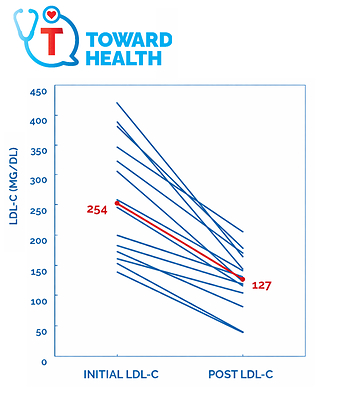
- Median LDL cholesterol fell from 254 to 127 mg/dL.
- Median LDL reduction was 53.2%, or 125.5 mg/dL.
- Among 12 patients taking ezetimibe without a statin, median LDL reduction was 50.4%.
- Total cholesterol fell by 38.5%.
- Triglycerides fell by 23%.
- HDL cholesterol remained essentially stable.
- All 14 selected patients exceeded the approximately 18% average response conventionally associated with ezetimibe.
Importantly, the reductions occurred without requiring patients to discontinue their ketogenic dietary pattern. This suggests that selected patients may be able to address substantial LDL elevations while preserving the other metabolic benefits they experience from carbohydrate restriction. "This was not a minor laboratory fluctuation," said study author Laura Buchanan, MD. "The median LDL reduction exceeded 125 mg/dL. Even among patients taking ezetimibe without a statin, LDL fell by approximately 50%. That is a biological signal too large to dismiss." This was a retrospective case series of selected responders, not a randomized or head-to-head trial, and it did not evaluate cardiovascular events. The findings identify a potentially important responder phenotype that now requires prospective testing. Those limitations do not erase the finding. They define the next study.
The Statin-First Script Is Not Precision Medicine
Statins remain effective and potentially lifesaving for many patients, but they are not biologically neutral. They can cause muscle symptoms, elevate liver enzymes, modestly increase diabetes risk, and produce other adverse effects that lead patients to seek alternatives. "Just go on a statin" is not precision medicine. "The correct question is not simply statin or no statin," Kalayjian said. "The question is what is driving this patient's LDL, whether cardiovascular disease is actually present, and which treatment produces the best response in that individual. Patients deserve plaque assessment, metabolic context, treatment selected for their physiology, and objective follow-up."
TOWARD Health is putting that principle into practice through its. For $450, the physician-reviewed program coordinates a coronary artery calcium scan and advanced metabolic laboratory testing across the United States. The program gives patients affordable access to objective plaque imaging and metabolic risk assessment before they commit to lifelong treatment based on population averages alone.
A Possible Diet-Drug Interaction
The investigators propose that prolonged carbohydrate restriction and low insulin exposure may alter cholesterol absorption, recycling, and transport in a subset of patients. Reduced endogenous cholesterol synthesis may increase reliance on intestinal and biliary cholesterol absorption. LDL-derived cholesterol may also be rapidly esterified through an ACAT2-associated pathway and resecreted in ApoB-containing particles. Blocking NPC1L1 with ezetimibe may interrupt that cycle. The mechanism remains hypothesis-generating, but it offers a biologically coherent explanation for LDL reductions ranging from approximately 34% to 74%. Contrary to a hypothesis advanced by prominent lipidologists, available sterol and genetic testing did not support biallelic ABCG5/ABCG8-mediated sitosterolemia as the explanation for the cohort. Testing also found no pathogenic or likely pathogenic LDLR, APOB, or PCSK9 variants explaining the response.
TOWARD Health is a small independent medical practice, not a multinational pharmaceutical company. Its clinicians collaborated with researchers affiliated with Wake Forest University School of Medicine, Tecnológico de Monterrey, and the Instituto Nacional de Ciencias Médicas y Nutrición Salvador Zubirán to document an observation that can now be tested and potentially used worldwide. "We are not claiming that a generic pill should replace every statin or PCSK9 inhibitor," Kalayjian said. "We are reporting that selected patients experienced LDL reductions within the range reported in PCSK9 inhibitor trials using a generic drug costing approximately $10 per month. Ignoring that signal because it disrupts an established prescribing ladder would be indefensible."
Employers Cannot Continue Paying for Medical Dogma
Employers are being asked to absorb escalating costs for specialty medications, biologics, weight-loss drugs, and lifelong therapies. That pressure is unsustainable if every clinical problem is answered with the newest and most expensive product. Before committing patients and health plans to high-cost therapy, physicians should determine whether an older medication can produce a comparable response in the patient sitting in front of them. A $10 generic will never receive the marketing support available to a multibillion-dollar drug category. That is precisely why independent clinical research matters.
The accepted manuscript was authored by Jorge Gonzalez; Joshua Wageman, PhD, DPT, MPAS, CLS; Laura Buchanan, MD; Tro Kalayjian, DO; Matthew Calkins, MD; Erin Saner, MD; and Adrian Soto-Mota, MD, PhD. The study received no external funding. Joshua Wageman is an employee of Amgen. The manuscript reports no competing interests for the remaining authors.
About TOWARD Health
is a nationwide physician-led metabolic health practice specializing in obesity, diabetes, cardiovascular risk reduction, and chronic disease reversal through evidence-based nutrition, lifestyle medicine, and personalized medical care. TOWARD Health provides nationwide clinical care and coordinates affordable coronary artery calcium scans and advanced metabolic laboratory testing throughout the United States. Its physicians use imaging, laboratory data, metabolic health, patient preferences, and treatment response to move beyond one-size-fits-all medicine.
More information about the new paper can be accessed at the
Media contact:
TOWARD Health
845-397-1115
email: [email protected]
Media Contact
Taline Boyadzhyan, Toward Health, 1 8453971115, [email protected], Toward Health
SOURCE Toward Health

Share this article